
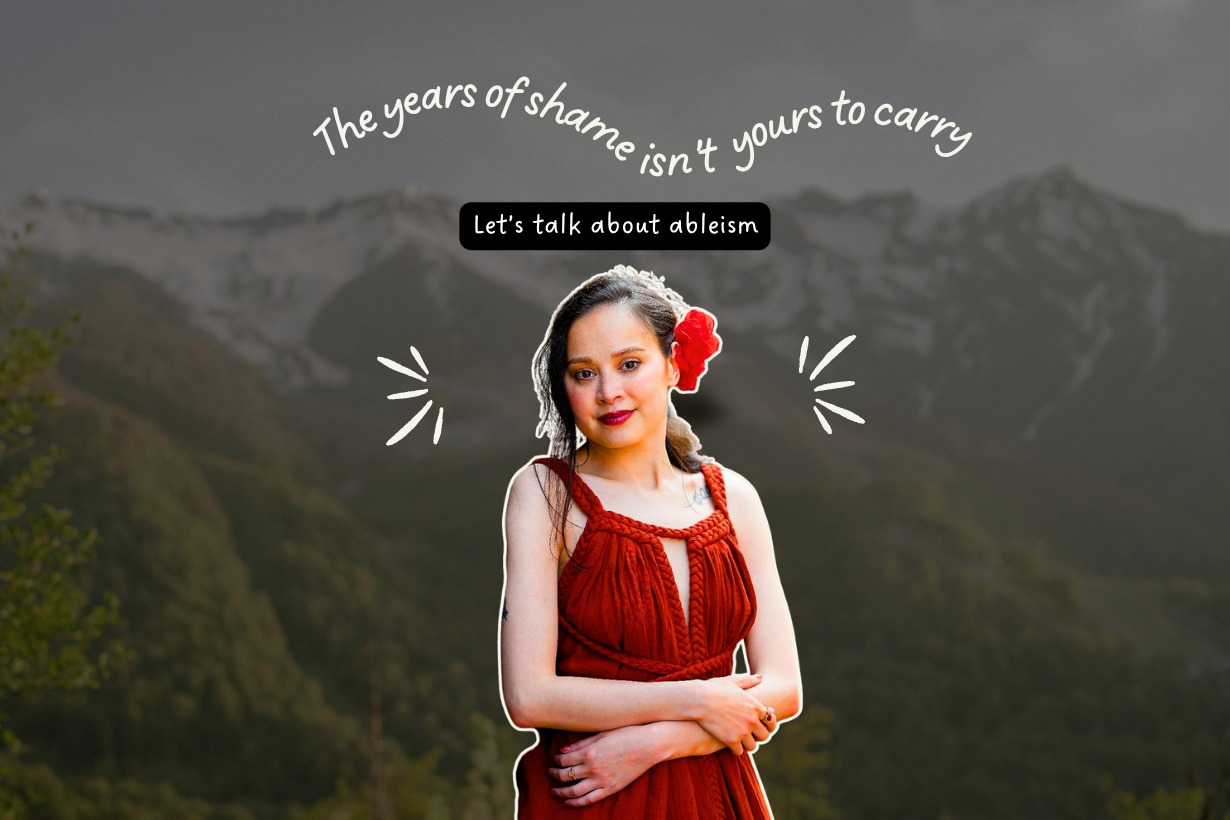
If you have a chronic illness or disability, you will have encountered prejudice, injustice or oppression in many ways from able-bodied people (whether intentional or not) or systemic institutionalisation. It’s called ableism.
You may also have questioned what you did so wrong to deserve this illness or treatment. I know I did.
It goes back centuries. Years and years of mistreatment and heavy conditioning from society. Without getting into the horrific detail of history, as Unlearning Ableism does in its dutiful way to highlight the truth, there are some insights which provide clarity.
“According to the Governor’s Council on Developmental Disabilities (2025), the evidence for discrimination against Disabled people and ableism within society is traceable back to the dawn of civilisation as we know it today, with biblical extracts and Roman philosophers describing the prohibition of Disabled people from marrying, having children, or integrating in society. During this time, Disability was viewed as a sign of weakness, a symbol of lack of authority, intelligence, power, and influence.
We all know the stories of the ‘witches’ – women who were burned and drowned for doing ‘the devil’s work’. What you probably don’t know is an often unspoken-about truth that Disabled women of this time – those with physical, mental, and pain-inducing illnesses – were one of the greatest victims of this practice. They were hunted down and killed, and medieval doctors would perform purification rituals on the brain and skull to allow for the removal of ‘evil’.
Unlearning Ablesim, Jamie Shields , Celia Chartres-Aris, 2025
Abhorrent, evil and shocking, right?
But it explains how deep the conditioning goes and the potential intergenerational trauma that we all experience. It’s no wonder so many disabled folks think they “did something wrong”, feel they are not “pure enough”, ask “ what did I do to deserve this?” ” or feel they are not worthy of anything.
Religion, institutionalism, the patriarchy, and eugenics have so much to answer for. It is heartbreaking in so many ways.
Thankfully, this way of thinking and many horrific acts have been abolished and no longer happen, and the progress we’ve made today is encouraging, but we’ve ways to go yet.
For so long, the onus has been on the disabled person or disabled communities to adjust and adapt to a world not designed for them. When it should be the world adapting to us and providing for us. Providing equality.
I’m not just talking about providing access ramps, Braille writing and financial support to change the game. It has to be in our everyday interactions, behaviour, language and conversations.
For example:
- When speaking to a visibly disabled adult, speak to them directly and clearly, and like you would a normal person – don’t assume they’re incompetent, and don’t avoid eye contact or speak to their care. I hear many adults feel they’re spoken to like they are children, and that is upsetting.
- Don’t use words like “retarded”, “crippled”, “imbecilic” etc to describe someone. This is deeply offensive and disgusting.
- Don’t chastise someone for using the disabled toilet or parking space if you don’t see a visible disability. Invisible illnesses and mental health disabilities exist.
- Avoid using fluffy language that feels sugar-coated to make the person speaking feel comfortable instead of the disabled person – the word “disabled” is fine e.g. “differently abled” or “special” are also offensive.
“If being Disabled was so special, surely society would be designed for us? Shocker that it is not. Special is code for, ‘Aww, a poor Disabled person’. Special assumes. Special disables. Special carries trauma. Let’s please unlearn it.”
Unlearning Ableism -The Ultimate, No-Nonsense Guide to Understanding Disability and Unlearning Ableism Jamie Shields , Celia Chartres-Aris
“Research by Leonard Cheshire (2022) revealed that 52% of Disabled workers reported experiencing ableist language in the workplace, contributing to exclusion and lower promotion rates. A study by the Anti-Bullying Alliance (2019) found that children who experience ableist language at school were more likely to struggle with self-esteem and academic performance (Anti-Bullying Alliance, 2019). Ableist language leaves its mark.”
The point is to drive a real change for community and inclusion where we’re not to be pitied, seen as special or “inspirational” simply for existing or surviving.
As a witch, ahem, I mean… a woman (who may have been burnt in a past lifetime as a witch), intersectional discrimination on so many levels is at play here. For me specifically, being a woman in a patriarchal world, as well as being mixed race and disabled, adds another dimension, and my desire is to learn, educate and contribute to a fairer world.
It is important to see these issues not as separate, however, but as interconnected.
Intersectional problems require intersectional solutions.
And my ask is that you, as the reader, educate yourself with this blog and book recommendations. And to pass on the word.
Recommended Books
- Unlearning Ableism by Celia Chartres-Aris
- Demystifying Disability: What to Know, What to Say, and How to Be an Ally by Emily Ladau
- Care Work: Dreaming Disability Justice by Leah Lakshmi Piepzna-Samarasinha
Small ripples can have huge effects.


