Inspired by NuArt Aberdeen 2026 and walking artist Alisa Oleva
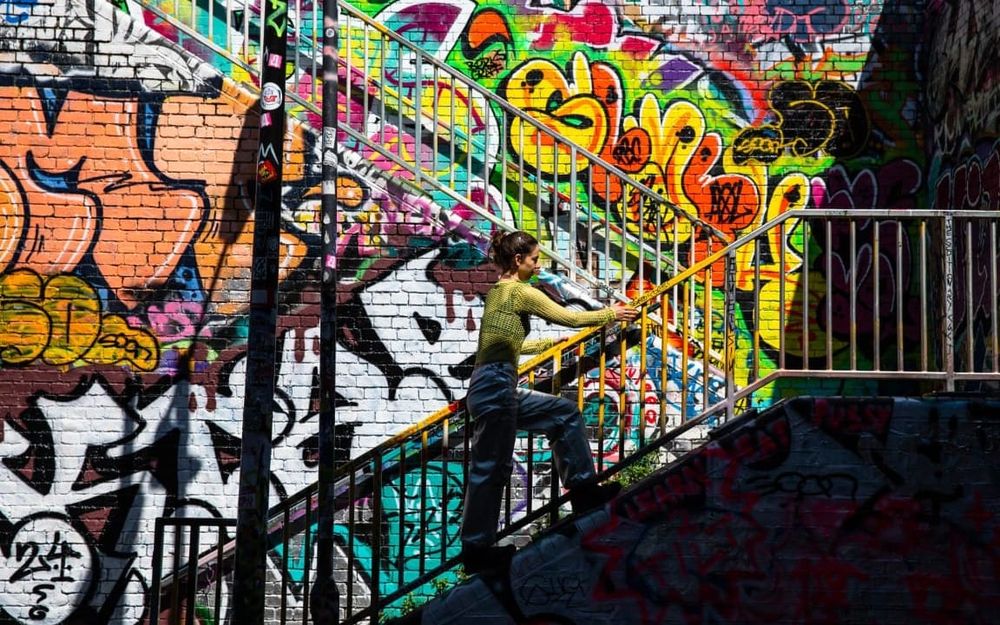
Alisa Oleva moves through a graffiti-covered stairwell, the city as canvas.
Last month I attended a couple of local talks in Aberdeen, since they were hosting their annual NuArt 2026 festival across the city, where it really was a lens and reminder into how art can play a large role in active recovery.
By its nature, we all know that art is a space where individuals can express their own emotions, feelings, opinions and thoughts into whatever medium, whichever channel, with various materials of their choice and whatever projection or image outcome. It’s also a place for processing trauma, complex feelings or challenging emotions.
ScienceDirect.com and other research show, as highlighted by The Guggenheim Museums and Foundation, that creating art can actively alter neural pathways, fostering improved emotional regulation and reducing the impact of traumatic memory on the brain.
The talk I attended was all about Creating the Ephemeral with Alisa Oleva, a walking artist, as part of a key panel. ‘Ephemeral’ simply means short-lived, transitory, fleeting, or transient.
What’s unique about her outlook and experiences as a movement artist is that she guides people on walking tours to think about possibilities and dreams — to move beyond the physical or emotional limitations in front of them.
As well as working with nature and structural buildings, she explained that there’s nothing a person can do to move the wall that’s in front of them or change its shape, but they can climb over the wall or use it to their advantage. Art is malleable and flexible, and so are you.
Our bodies may seem fixed, but our minds can move through it.
It was a powerful reminder of movement beyond boundaries. When it comes to the ephemeral experience, she reminds us that it’s essentially the presence and beauty of awareness. The impermanence of it all is what makes things even more beautiful and precious.
So when we’re creating joy or experiencing joy, it’s an ineffable and sacred feeling that shouldn’t be contained. But rather felt … and let go. A “commitment to falling while walking” were her words. If we think about babies and toddlers — they fall all the time but aren’t scared. They get up and go at it again.
It gives agency within confined structures and is like a mini superpower you can have in your pocket. So you aren’t just experiencing ephemeral moments, but you can deliberately and proactively create more of them. This builds a more proactive approach rather than letting life pass by.
By that, I don’t mean get unnecessarily busy, but for example, choosing to spend five more minutes of uninterrupted, quality time with your dogs or grandkids can be an ephemeral and healing experience.
An example of the temporary that I use all the time is when Tibetan Buddhist monks create intricate sand mandalas over several days or weeks, only to intentionally destroy them immediately upon completion. This ritual symbolises the core doctrine of impermanence — the belief that nothing in life lasts forever. The act teaches non-attachment and highlights the importance of appreciating the present moment over material beauty.
I use these principles when I’m feeling pain or beauty, particularly as I navigate many challenges in my journey as a disabled, chronically ill individual, and as I wait for The Call for a lung transplant.
Every morning I have different symptoms, and it can be the most challenging as I steady myself for the day — but I do my best to create daily moments of presence, joy and the ephemeral. I have no clue what tomorrow will bring, and none of us do, so we’re here to simply be and do our best each and every day.
Ephemeral it is!
 Lungevity