Many of us in the disabled community know how it feels to be trapped. Physically. Mentally. Spiritually. Entirely.
In my case, I face this on a daily basis. I have to adjust my movements and pace depending on how my lungs and breathing are doing each time. I must watch where I’m going to avoid tripping over my oxygen wire. I’m tethered to a machine that’s limited to 35 metres of tubing inside the house.
And whenever I leave the house, I carry a heavy portable oxygen concentrator and, often, rely on my wheelchair, as walking even short distances leaves me winded.
That’s just the physical side.
Mentally, I’ve had to accept that I can’t leave my hometown. I’m on the lung transplant list, and there are countless medical requirements I need just to survive. I don’t know how long this will be the case — or if it will ever change.
Spiritually, back in 2024, I hit rock bottom. I felt hard done by, questioned my faith, and almost gave up the fight. I stopped believing in anything. It was a real existential crisis.
This is wildly different from the life I had before, where I had freedom, mobility and lived closer to a “normal” reality. Just two months before my health collapsed, I had travelled to Fuerteventura, Los Angeles, and Vienna.
It sounds like a lot, right?
Of course, no one would sign up for this kind of life. But because I’m living it, and because millions of others are going through their own versions of hell, it’s important to say this clearly:
There is still hope.
The Other Side of Hell
Following the wrath of ugly emotions, intense grief, anger, guilt, sadness, and anguish, there is a turning point.
It’s incredible how quickly the human mind and heart can adapt. I’m not saying I’m perfectly content now, but I am much more peaceful and accepting than I was even six months ago.
So, how did I get there?
It took a combination of actions and the support of many. If something I mention here feels inaccessible or too privileged, it’s not meant to be. And I believe these kinds of resources and support should be made more available to all of us. I welcome your feedback, always.
A big part of it is a game with the mind. And having the right medications, especially for pain management, with the guidance of a specialist. This isn’t about numbing out; it’s about finding the right balance, safely.
Basic Routines
As simple as it sounds, routines give shape to days that can feel endless and formless. In the beginning, I could only manage the basics: eating, sleeping, and medication.
Once I stabilised, I slowly added in more: gentle exercise, small creative tasks and anything that lifted my spirits.
It’s taken almost a year of recovery (through pulmonary rehab) to feel more like myself. Eating, drinking, and personal care are things you can return to when you get lost in your feelings. They’re anchors.
Reading, Podcasting and YouTubing
Eventually, you’ll move past the apathy and anhedonia, but you’ll need to dig deep and find a reason to believe life is still worth living.
What helped me get there? Books. Podcasts. YouTube. And the stories of others who’d found light in dark places.
I once read about a man who said he never felt trapped by his wheelchair — instead, he saw it as a liberation, because it allowed him to get out and about, rather than being stuck in bed or indoors.
There are so many inspiring people out there — disabled and able-bodied. Tragedies and adversity are inevitable for all of us. But how we get through it… that part is still ours.
You can also check out my essential book reads list for a good starting point.
Sunshine Moments, Meditation, and Gratitude
If this sounds too cliché, that’s because it is. But clichés exist for a reason: they work.
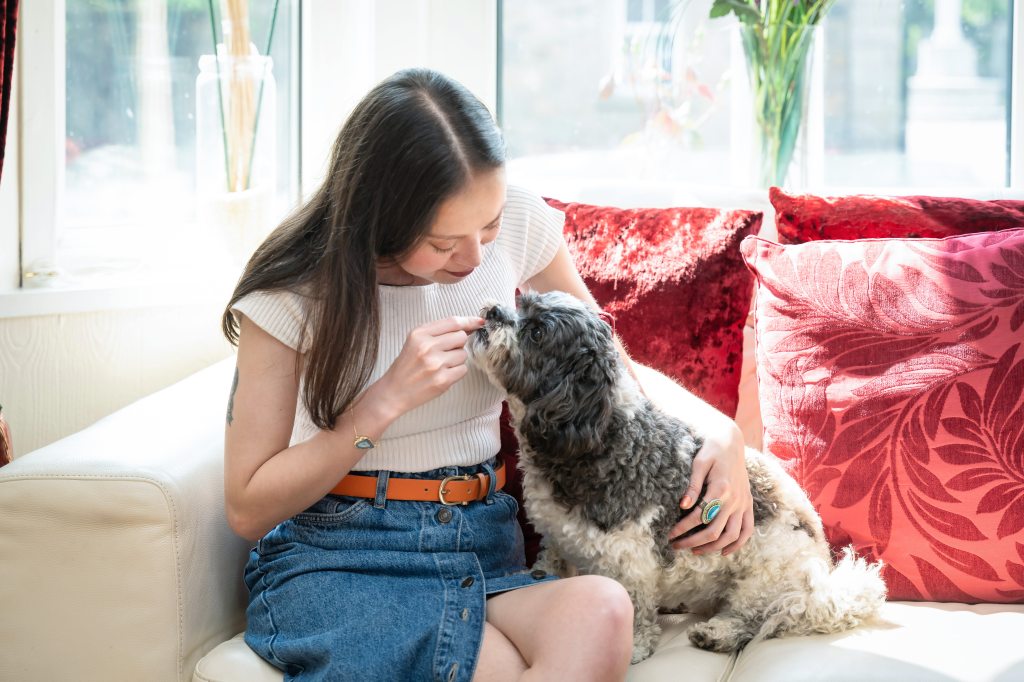
My psychologist introduced me to the idea of sunshine moments — tiny fragments of joy that brighten the day: a cuddle with your dog, a good conversation, a hot shower, a favourite TV show.
Gratitude also carries a distinct brain signature. It reduces stress and lowers anxiety.
Dr Tara Swart, neuroscientist and author of The Signs, explains this beautifully. She links awe and beauty with the release of oxytocin — the “feel good” cocktail of love, joy, and safety.
“I’ve extended my gratitude practice to include awe from beauty,” she says.
“In the autumn, I was obsessed with red leaves. In the spring, it was the blossoms. And I really listen out for birdsong. When birds are singing, it signals safety to our ancient brains. Your cortisol drops. Your blood pressure lowers. It’s remarkable.”Dr Tara Swart – Neuroscientist
Journaling
You can pair journaling with gratitude — for example, by keeping a daily “sunshine list.” But it’s also a powerful way to process trauma, grief, or anxiety.
There’s a wealth of neuroscience behind the benefits of expressive writing. One of my favourite podcast episodes is by Dr Andrew Huberman, where he walks through a specific protocol for healing through writing.
Personally, writing has always been a part of my life and identity. I journal in the mornings, scribble freely, or write down ideas that come to me in flashes. Even the act of putting pen to paper is healing.
Movement and Creativity
If you’re physically disabled or battling fatigue, movement may feel impossible. I get it. I’ve cried over that loss many times.
But here’s something I’ve learned (and reminded by my sister!): Don’t add mental anguish to physical pain. Your body doesn’t deserve that double burden.
Start with compassion. Be kind to yourself. When you lower the pressure and expectations, movement becomes more doable — and more enjoyable.
I used to do full yoga classes before my health declined. Now, I practice gentle restorative yoga at home. It’s not what I used to do, and maybe I’ll never return to that level (or maybe I will!), but I celebrate what I can do today. That’s enough.
No one can predict the future. So I focus on the present and follow the 1% rule — a little progress, consistently.
Adjustments and modifications are always possible — with props, videos, or support from your care team.
For respiratory conditions like mine, pulmonary rehab has been vital. Even if you’re a wheelchair user or housebound, there are still ways to move — and movement can help combat depression and isolation.
You can explore my Pulmonary Rehab Guide for ideas and inspiration.
Hope Still Lives Here
Wherever you are in your journey, whether you’re in the thick of grief or on your way toward a gentler kind of acceptance, you are not alone.
There is life to be found even in the smallest of places. In a warm cup of tea. In the laugh of someone who gets it. In the next page of a book. In the way your body still shows up for you, even if it’s different from before.
I don’t write this because I’ve figured it all out, I write it because I’m still in it. And if anything I’ve shared helps you inch a little closer toward peace, then that’s a win for both of us.

 Lungevity