
Books have saved my life.
For as long as I can remember, I’ve loved reading — fiction and non-fiction alike.
As someone now living with physical limitations, books feel even more powerful. They can transport you to another world, melt you into the pages of someone else’s story, and offer a kind of escape or comfort that few other things can.
Sometimes, they help you forget your own problems. Other times, they help you make sense of what’s been weighing on your mind for the past sixteen hours.
Plus, it’s far better than doomscrolling.
With so much wisdom out there from authors who really get it, I wanted to share a curated collection of books that have truly helped me — with both physical and mental health.
I know these will speak to many of you too.
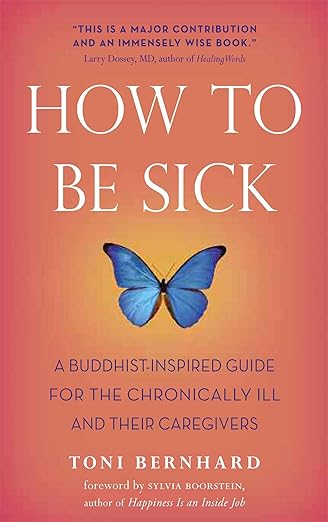
1. How to Be Sick by Toni Bernhard
This book is like a balm for anyone living with chronic illness. Toni Bernhard, a former law professor, became seriously ill and was forced to step away from her career and the life she knew.
What makes her writing so powerful is how honest and grounded it is — she doesn’t offer quick fixes or toxic positivity.
Instead, she shares a deeply human, Buddhist-inspired approach to living well with illness. It’s especially comforting if you’ve ever felt isolated, frustrated, or invisible. Her reflections on envy, grief, and the “loss of former selves” are written with a rare tenderness that feels both validating and empowering.
Favourite takeaway:
By leaning into the idea of “giving in instead of giving up”, she invites a practice of surrender — not as defeat, but as relief.
Letting go of the constant strain and resistance makes space for peace. It’s a gentle dance: accepting what is, while still carrying the quiet fire to move forward with hope.
Buy it on Amazon here.
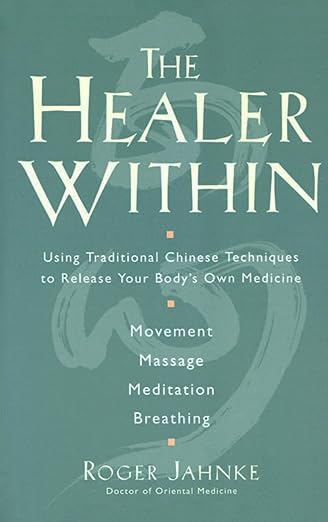
2. The Healer Within by Dr Roger Jahnke
Rooted in ancient Chinese medicine and modern integrative practices, The Healer Within offers simple, accessible techniques — breathwork, gentle movement (like Qigong), self-massage, and focused intention — that can be done by anyone, regardless of ability.
For those living with chronic illness, it’s empowering without being overwhelming.
Jahnke writes with deep respect for the body’s wisdom and the human spirit’s capacity to heal in ways that aren’t always about curing. It’s not a miracle cure book — it’s a guide to reconnecting with your body in a loving, intuitive way.
Favourite takeaway:
Your body carries ancient intelligence — the breath, your thoughts, your hands, your focus — these are medicine too. I love Jahnke’s respect for people with differing abilities and he outlines modifications for those who are sick or bedbound.
When gentle movement is integrated with full relaxed breathing and deep relaxation of the mind, the human body enters an especially healing and restorative state. This has a distinct effect on the blood ,the nervous system, the immune system, the lymphatic system, and oxygen metabolism. ”
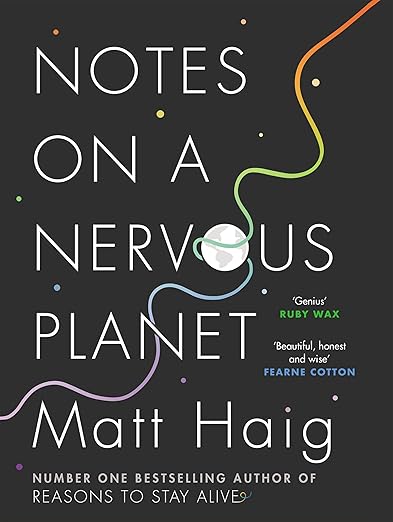
3. Notes on a Nervous Planet by Matt Haig
Written with honesty, vulnerability, and a sharp cultural lens, Matt Haig explores what it means to live in an age of constant stimulation, information overload, and invisible pressure.
While not written specifically for those with chronic illness, Notes on a Nervous Planet hits home for anyone who’s ever felt overwhelmed, anxious, or out of sync with the pace of modern life.
Haig unpacks mental health in a fragmented world, offering reflections that feel like someone sitting beside you saying, “You’re not alone in feeling this way.” It’s a calming, beautifully human book — one that helps you breathe a little easier.
Favourite takeaway:
“The world is increasingly designed to depress us. Happiness isn’t good for the economy. So be a gentle rebel — slow down, disconnect, and protect your peace.”
Haig will quickly become one of your favourite authors. He certainly did for me, for both fiction and non-fiction. The Humans is another one of my favourite books by him.
Buy it on Amazon here.
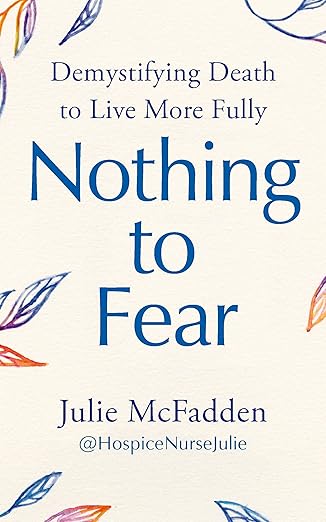
4. Nothing to Fear by Julie McFadden
Nothing to Fear offers a gentle yet deeply honest conversation about one of the most taboo subjects in modern life: death.
Julia McFadden draws from her work in hospice care to unpack the emotional and spiritual weight of death anxiety, guiding readers to confront fear not with dread, but with curiosity and compassion.
This book doesn’t force a rigid belief system or wrap everything in neat spiritual bows — instead, it invites reflection, acceptance, and a softening around the unknown.
For those living with chronic illness, or anyone simply grappling with mortality, it’s a grounding companion that helps shift the fear of dying into a deeper appreciation for living.
Favourite takeaway:
Fear begins to loosen when we give it space to be seen. Facing death doesn’t take away the mystery — it just makes us less afraid to sit with it.
Buy it on Amazon here.
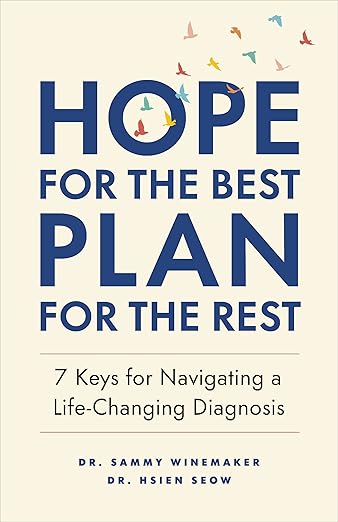
5. Hope for the Best, Plan for the Rest by Sammy Winemaker & Hsien Seow
This book is a heartfelt guide for those navigating serious illness — not just patients, but families and caregivers too.
Dr. Winemaker and Dr. Seow bring both clinical expertise and human empathy to a topic that’s often shrouded in fear and uncertainty. They speak openly about palliative care, decision-making, and communication with healthcare providers, but do so with a hopeful, empowering voice.
It gently reminds us that preparing for what may come is not giving up — it’s taking back a sense of control.
For anyone living with a life-limiting condition, it’s like being handed a roadmap and told, “You don’t have to do this alone.”
Favourite takeaway:
Planning for the rest of your life — no matter how long that is — is an act of courage, not surrender. It frees up space to actually live.
Buy on Amazon here.
Living with chronic illness is often shrouded in uncertainty — of the body, the mind, and the path ahead. But books like these can become quiet companions on the journey. They remind us we’re not alone in our fears, our questions, or our longing to feel peace amidst it all.
Whether you’re searching for a deeper sense of meaning, guidance through tough decisions, or simply a moment of calm in your day, I hope one of these titles speaks to you, the way they spoke to me.
And remember, it’s okay to have days where you don’t want to be strong.
On those days, let someone else hold the hope for you — even if it’s just a voice from a book.


 Lungevity